



Guntars Godiņš (1958) is a poet and translator, particularly translating from Estonian and Finnish. He is the author of five books of poems and the translator of 80 books (mostly poetry).
Guntars Godiņš was born on 26 April 1958 in Viesīte. He is a graduate of the University of Latvia (1978-1983) where he specialized in Latvian language and literature (1978-1983), and of a course in Finnish language and culture at the University of Helsinki (1994). The first two books of poems Tas nepasacītais (The Unsaid) ((1985) and Ar atpakaļejošu datumu (Retroactively) (1989) were censored heavily, for at that time, Godiņš wrote biting and ironical anti-Soviet poetry, rich in subtexts. He has worked at the Literature Section of Latvian Radio and has been an editor at the intellectual magazine Avots (1987-1991). Godiņš’s poetry book Ēnu nesēji (Shadow Carriers) (1993; Ojārs Vācietis Prize) “was a turning point in Godiņš’s poetry – his active opposition to Soviet power was replaced by political non-involvement”. In 2000, his poetry book Nakts saule (Midnight Sun) was published and, in 2008, CV, his collection of poems written between 1978 and 2008. In this book, the author included both published and censored as well as completely new works.
Books of selected poems by Guntars Godiņš have been published in Estonian, English, Swedish and Turkish. His poems have also been translated into Finnish, French, Russian, Lithuanian, Ukrainian, Czech, Chinese and other languages.
Guntars Godiņš has been the translator of many works of Estonian poetry and fiction. For these, he has received several prizes: twice the Annual Prize of the Culture Capital Foundation of Estonia; Latvian Poetry Days Prize for the translation of a book of selected poems by Ilmar Laaban (2003) and for Mats Traat’s Harala Life Stories (2005). He has also been a four times recipient of the Latvian Annual Prize in Literature: for a selection of Estonian folksongs (2002), for a selection of poems by the Finnish poet Heli Laaksonen (2012), translated in a Latvian dialect, for the translation of the Estonian folk epic Kalevipoeg and for the book Surrealism in Estonian Poetry. Three times he has also received the Translator’s Prize given by the foreign ministries of Estonia and Latvia.
From 1992 to 1996, Guntars Godiņš was deputy chairman of the Latvian Writers Union and from 1998 to 2010 he was the cultural attaché at Latvia’s embassy in Tallinn. Having returned to Riga in 2009, he is an active translator of Estonian and Finnish literary works.
Poetry
CV [CV]. Riga: Jāņa Rozes apgāds, 2008.
Nakts saule [The Night Sun]. Riga: Nordik, 2000.
Ēnu nesēji [Shadow Bearers]. Riga: Apgāds "Artava", 1993.
Man atņēma visu [They Took Everything from Me, together with Uldis Bērziņš, Jānis Baltvilks, Pēters Brūveris, Egīls Zirnis, Andris Žebers]. Riga: Avots, 1990.
Ar atpakaļejošu datumu [Backdated]. Riga: Liesma, 1989.
Tas nepasacītais [The Unspoken]. Riga: Liesma, 1985.
Books to fall for
Kārlis Vērdiņš, "Godiņa gadaskaitļi" [Godiņš by the Numbers], review of poetry collection "CV. Dzejoļi (1978-2008)", newspaper "Diena" [LV].
Inese Zandere, review of poetry collection "CV. Dzejoļi (1978–2008)", online magazine "Satori", 2008 [LV].
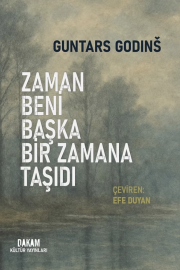
Zaman Beni Başka Bir Zamana Taşıdı
Zaman Beni Başka Bir Zamana Taşıdı (Dzejas izlase)
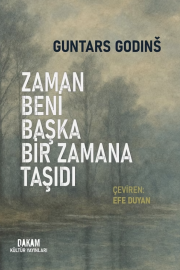
Title
: Zaman Beni Başka Bir Zamana TaşıdıTitle*
: Dzejas izlaseAuthors
:Translated by
:Genre
:Poetry
Language
:Turkish
Publisher
:Dakam
Pages
:Year
:2025
Copyrights
:The author
Synopsis
:Poetry collection by Latvian poet Guntars Godiņš translated into Turkish by Efe Duyan.